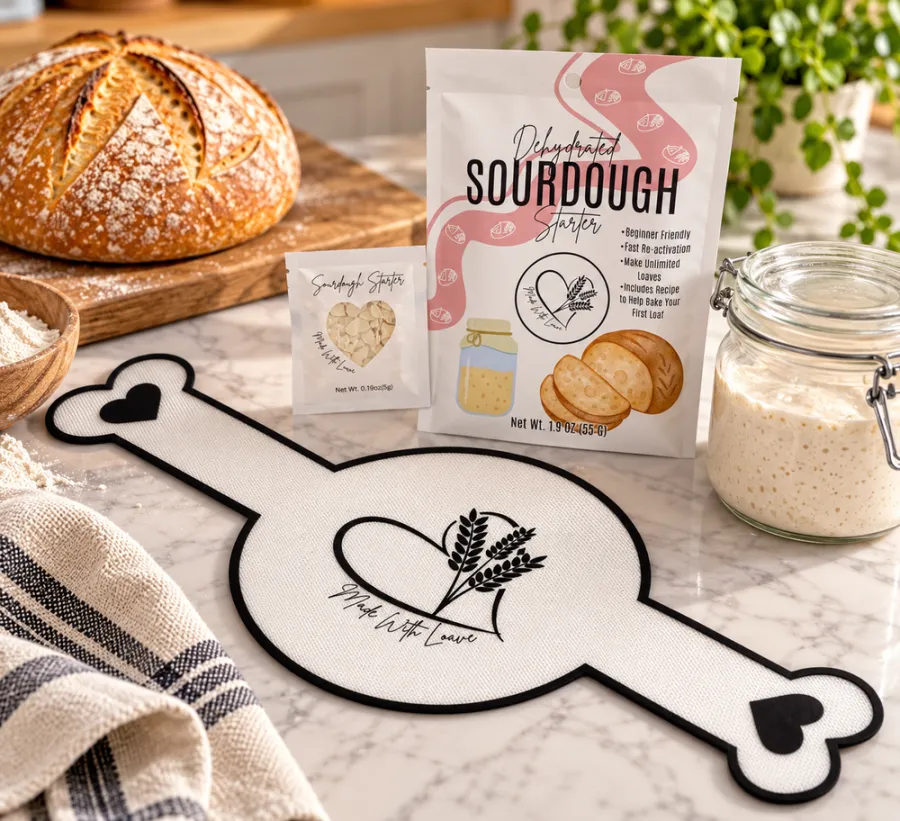
 For your first loaf
Sourdough Kit + Starter
$65Recipe, educational tutorials, and the tools for your first loaf.
Start with the kitFlour + water + a little patience
Your next loaf starts with something alive.
Give it flour and water. Move the clock forward and watch it wake up.
Try feeding the jar, then slide the hours below.
That first crackle
is worth the wait.
A little demonstration, not a baking timer. Temperature changes how fast a real starter grows.
A cool kitchen slows fermentation. Feed the jar to see what happens next.
Ready to bake? Get the kitThe baking shelf
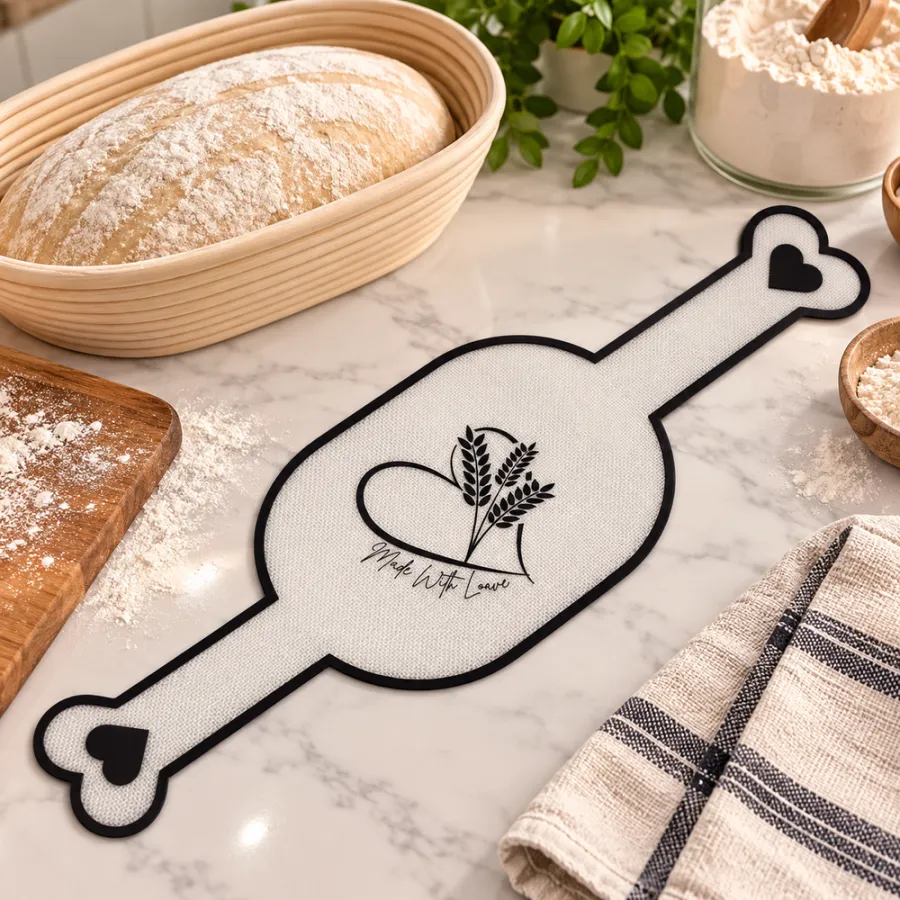
A starter to wake up. Tools to keep close. Something soft for the sofa, too.
Scoring tip
The ear starts before the oven. A fresh blade, held low, gives the loaf a place to bloom.
Currently sold out. Check the real shop for updates.
From a baker's kitchen
“The bowl covers are beautiful! The fabric is lovely and the sizes are perfect.”Karen HudmanSourdough Bowl Cover review, May 21, 2025. Read on the real shop.
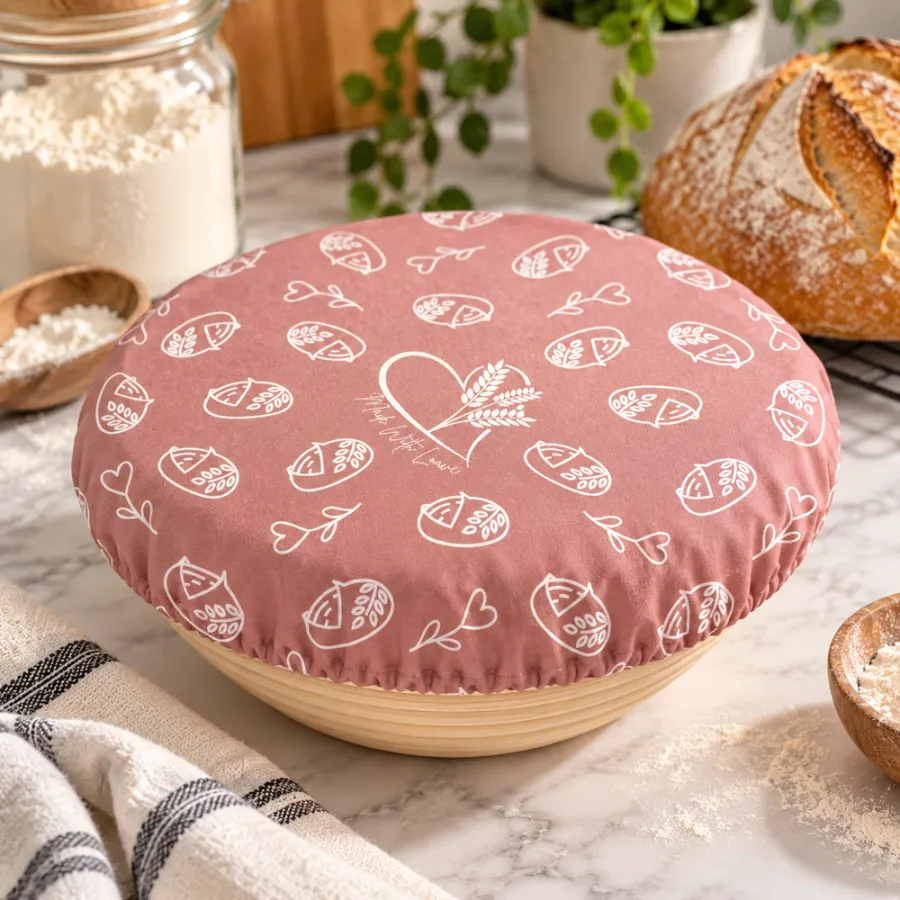
Starter refills & individual tools
A little know-how
A sleepy starter or a sticky basket can tell you something. Start with the advice from Made With Loave's own FAQ.
Get the free temperature chartCheck the room temperature first. At 65°F, activity can take two to three times as long as it does at 75°F. The shop recommends filtered water and unbleached flour, and its free temperature chart can help you find a warmer spot.
The starter you remove at feeding time still has plenty of flavor. Keep it covered in the fridge and use it within one to two weeks for pancakes, crackers, waffles, or pizza dough.
Dust the banneton's grooves with rice flour before adding the dough. It holds a dry barrier better than all-purpose flour. Let the basket air-dry after use and keep it out of the dishwasher.
A shorter fermentation and warmer room can reduce the tang. The shop also suggests using a higher proportion of starter and keeping the cold proof to 12 hours or less. Longer, colder fermentation makes a more sour loaf.
Keep it loosely covered in the fridge and feed it weekly. Before baking, take it out six to twelve hours ahead, feed it, and let it become active at room temperature.
The shop recommends checking that a spoonful of starter floats before a bake. Look for a strong, active starter as well, and follow the dough's appearance rather than relying only on the clock.